STAIN TREATMENT
Revive Your Pool’s Appearance
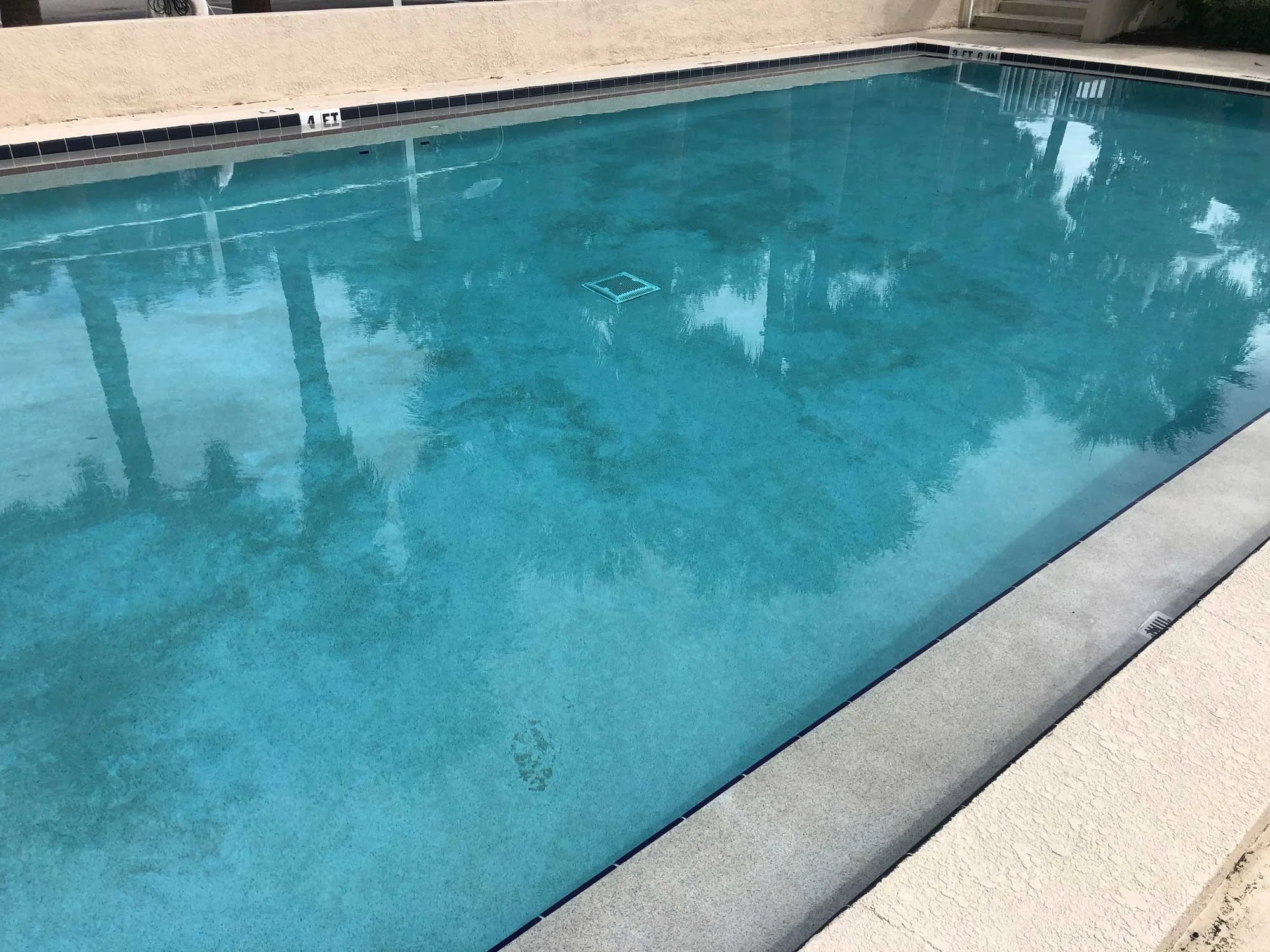
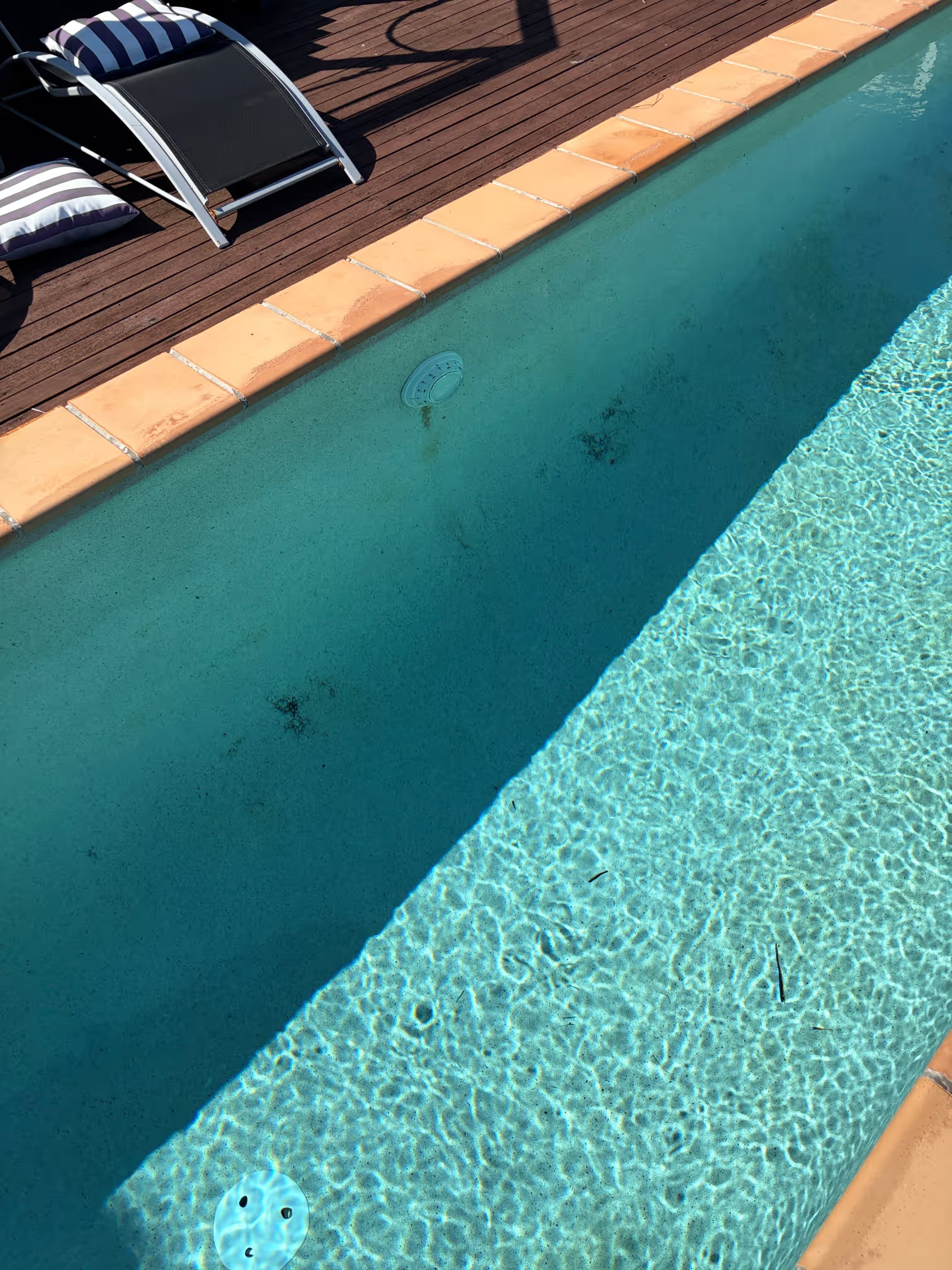
Pool stains can develop over time from metals in the water, algae, leaves, organic debris, or chemical imbalances.
These stains can leave your pool looking discolored, aged, and poorly maintained, even when the water itself is clean.
The stain treatment service is designed to identify the cause of the staining and apply the appropriate treatment to help restore the appearance of your pool surface and bring back a cleaner, fresher look.
Bring your pool back to its best — contact me today to book a professional stain assessment and treatment service.
Starting from $150 (Inc. GST)*
* Price doesn’t include chemical costs
DIFFERENT TYPES OF STAINS
Metal Stains
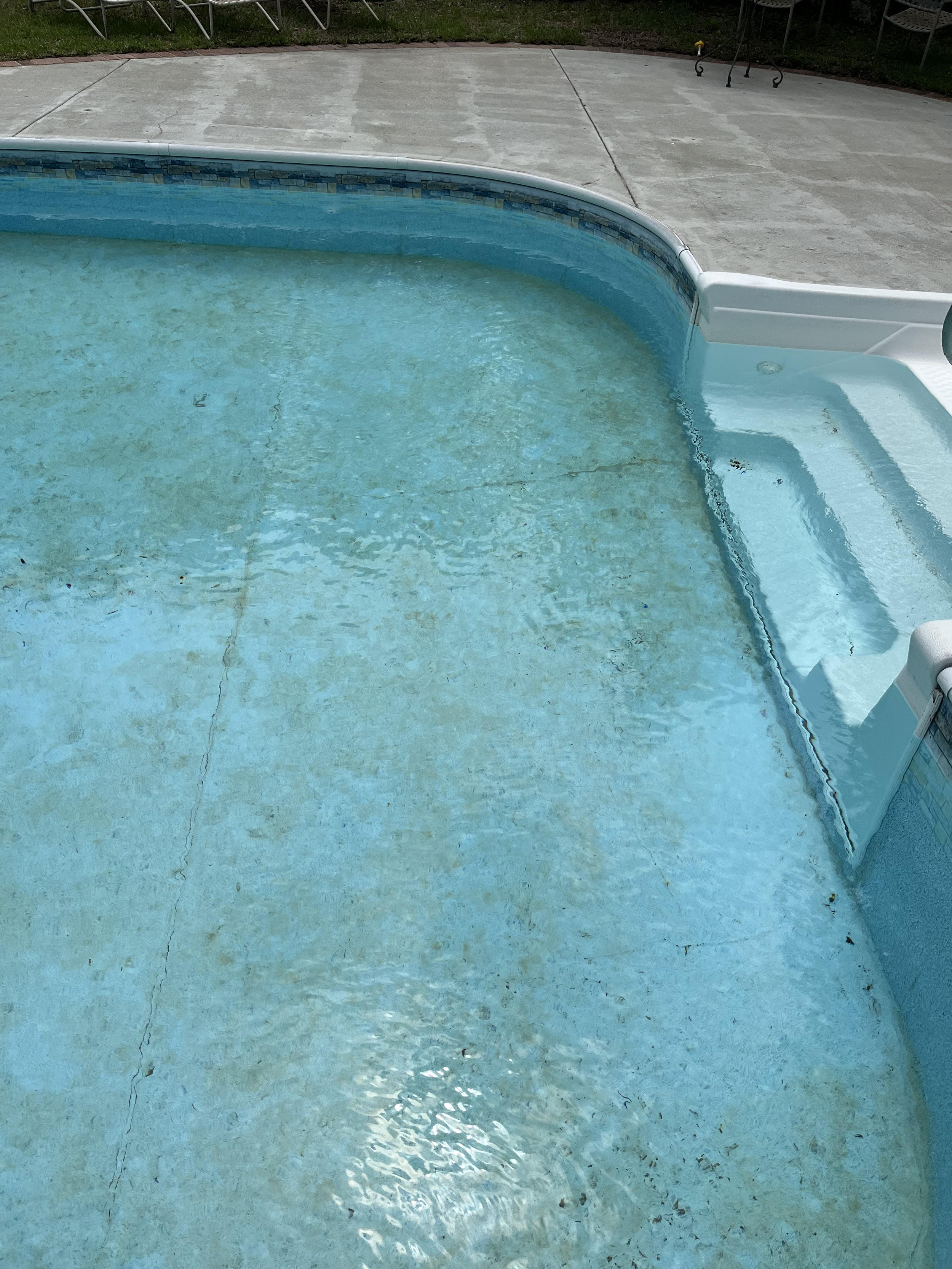
One of the most common causes of pool staining is metals dissolved in the water. Iron, copper and manganese can enter a pool through fill water, certain chemicals, corroding equipment or metal components.
Iron can produce yellow, orange, brown or rust-coloured stains, while copper can create dark blue or dark stains. These metals can remain dissolved in the water until conditions change, causing them to oxidise and deposit onto the pool surface.
Metal staining can sometimes appear suddenly after adding chlorine or adjusting the water chemistry. This is because the change in water conditions can cause dissolved metals to come out of solution and attach themselves to the pool surface.

Organic Stains
Leaves, grass, dirt and other organic material can also contribute to staining. When organic debris remains on the pool surface for an extended period, it can leave behind a discoloured mark.
Organic stains are particularly common in pools surrounded by trees and vegetation.
Calcium and Mineral Deposits
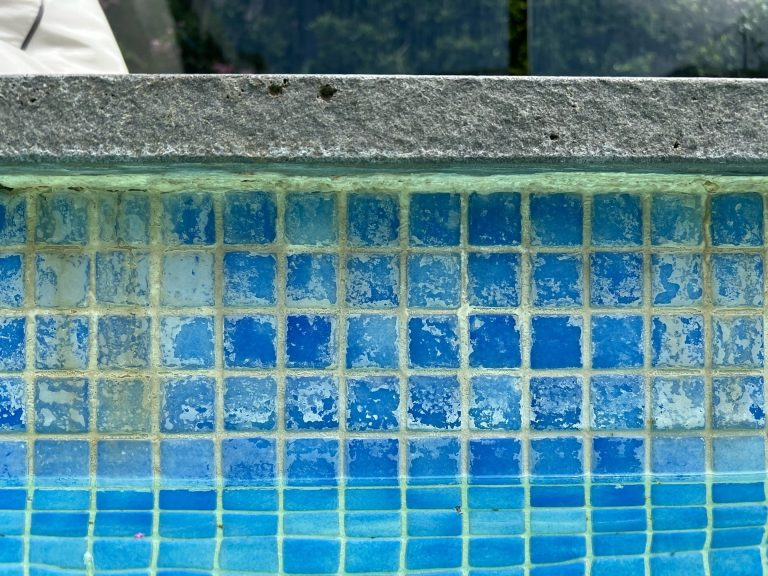
High calcium levels and unbalanced water can contribute to scale and mineral deposits on pool surfaces and equipment. These deposits may appear as white, grey or rough patches.
Calcium scale can be particularly noticeable around the waterline, fittings, steps and areas where water evaporates.
Corrosion of Pool Equipment
Metal components within or around the pool can sometimes corrode and release metals into the water. This may include screws, fittings, light components, ladders or other metal parts.
Rust-coloured marks around stainless steel fittings or other metal components can indicate a localised source of corrosion rather than a problem affecting the entire pool.
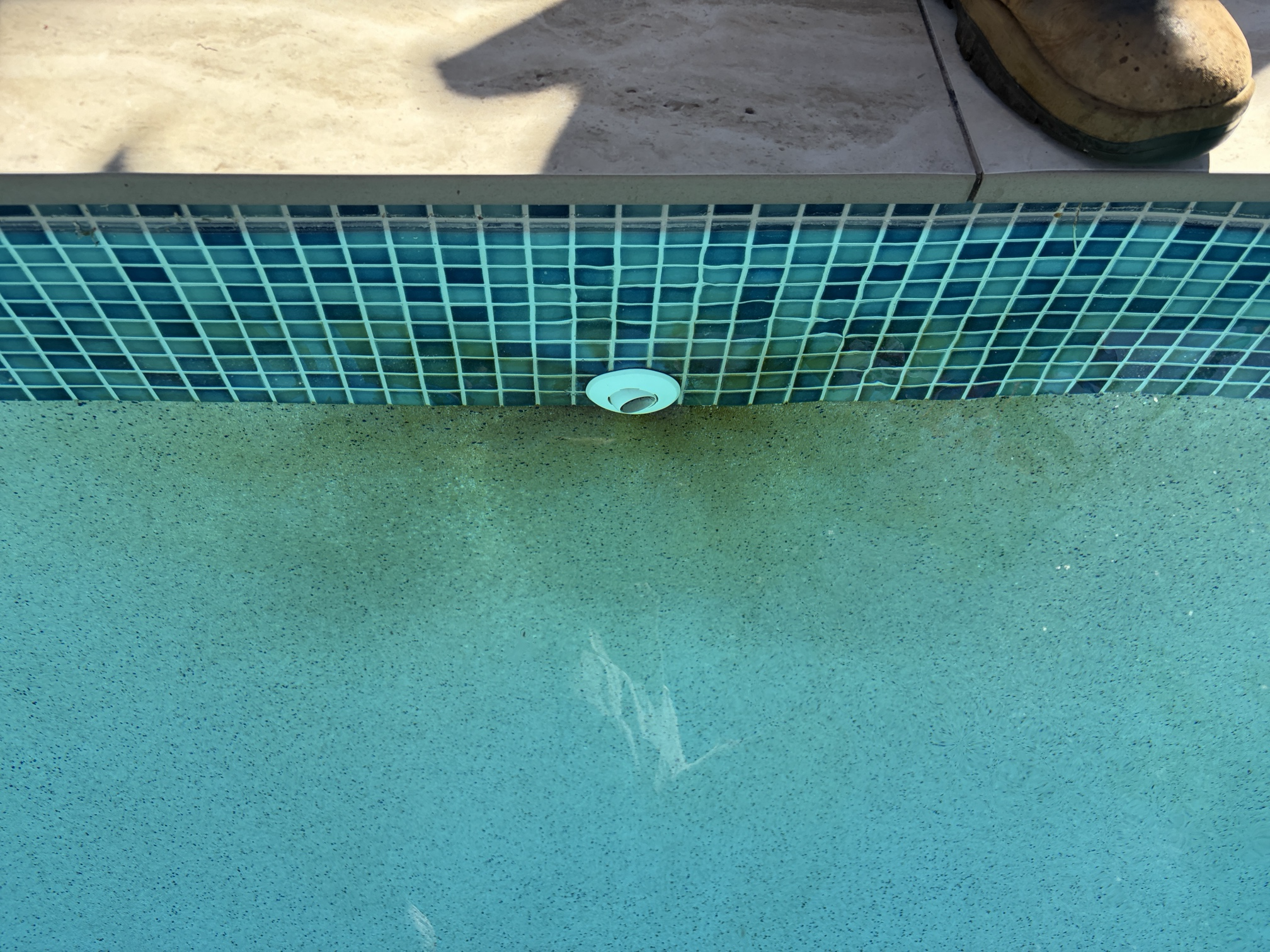

Algae
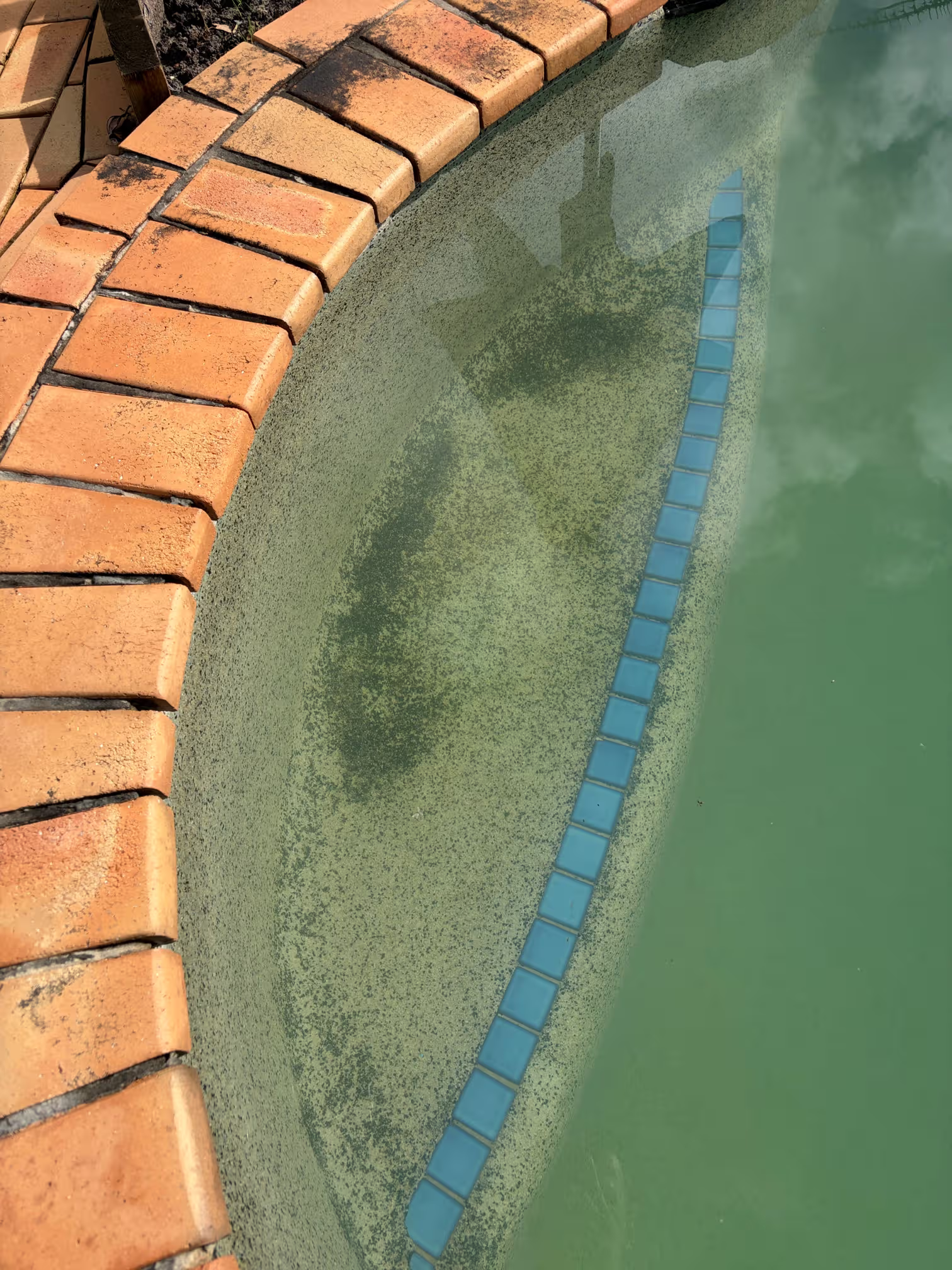
Algae can take on different appearances and can sometimes be mistaken for staining. Black spot algae, for example, can be mistaken for copper stains, while mustard algae can resemble salt deposits due to their similar colors.

Want to learn more about pool stains and common issues ? Check out my knowledge hub!